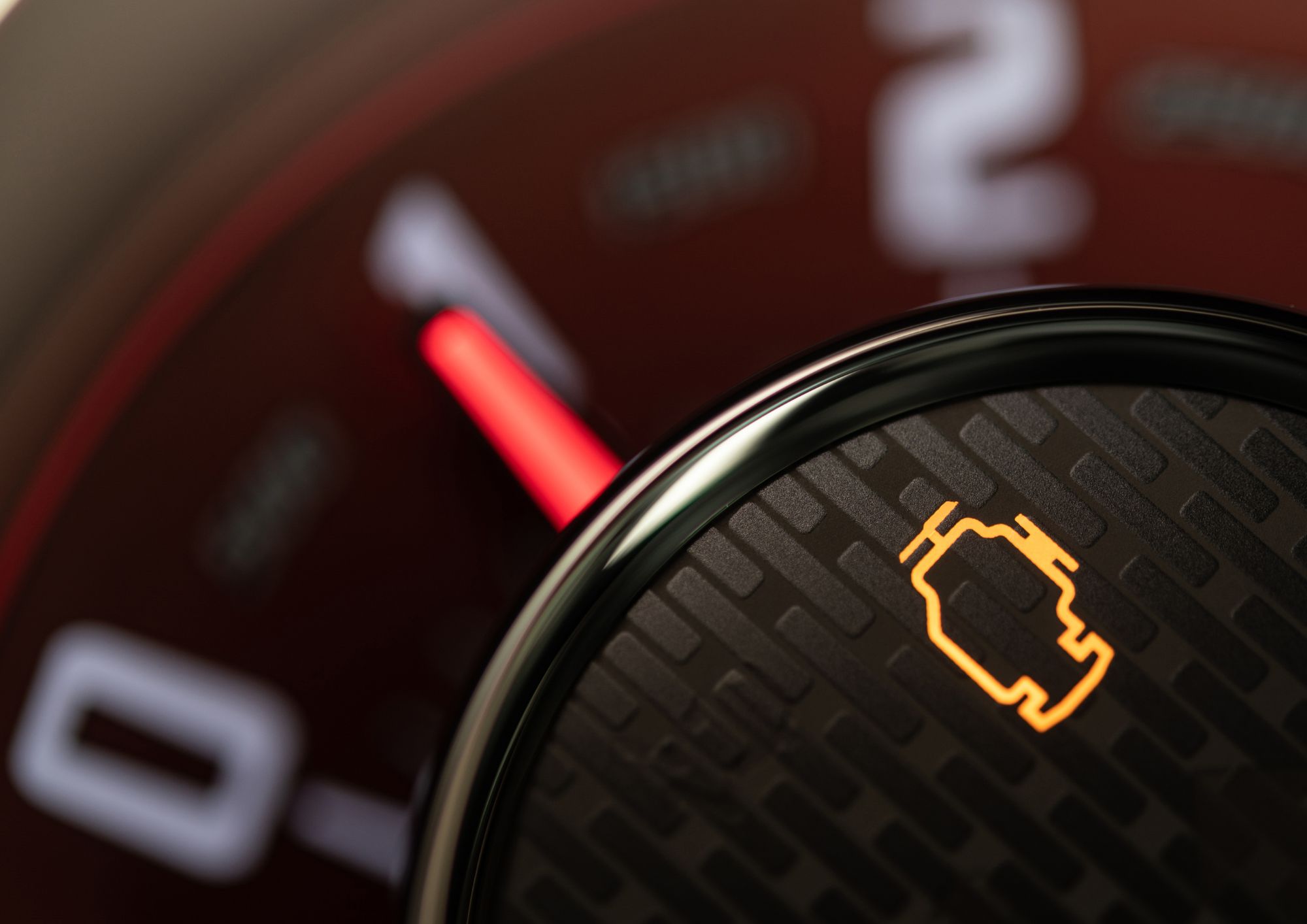
One of the most common questions mechanics hear is, “Can I drive with my check engine light on?” The answer depends on why the light has come on. While some issues are relatively minor, others can indicate a serious engine problem that could lead to expensive repairs if ignored.
The check engine light is your vehicle’s way of telling you that something isn’t operating as it should. Modern vehicles constantly monitor hundreds of sensors throughout the engine, transmission and emissions systems. When one of these systems detects a fault, the check engine light will illuminate to alert you.
Understanding what the light means and knowing when it’s safe to continue driving can help protect your vehicle and potentially save you thousands in repair costs.
What Does the Check Engine Light Mean?
The check engine light, also known as the Malfunction Indicator Lamp (MIL), is connected to your vehicle’s onboard diagnostic (OBD-II) system.
When the system detects a fault, it stores an error code that can be read using specialised diagnostic equipment. These codes help mechanics identify the source of the problem quickly and accurately.
The issue could be something as simple as a loose fuel cap or as serious as an engine misfire that could damage expensive components such as the catalytic converter.
Is It Safe to Drive With the Check Engine Light On?
Whether you can continue driving depends on how the warning light is behaving.
A Solid Check Engine Light
If the light is solid and your vehicle is driving normally, it is generally safe to drive for a short period. However, you should arrange for a professional diagnostic inspection as soon as possible.
Ignoring the warning could allow a small problem to develop into a much more expensive repair.
A Flashing Check Engine Light
A flashing check engine light is much more serious.
This usually indicates an active engine misfire, which can quickly damage your catalytic converter and other engine components.
If the light is flashing:
- Reduce your speed immediately.
- Avoid heavy acceleration.
- Pull over safely if the vehicle is running poorly.
- Arrange roadside assistance or have the vehicle inspected as soon as possible.
Driving with a flashing check engine light can significantly increase repair costs.
Common Reasons Your Check Engine Light Comes On
There are many reasons your check engine light may appear, including:
Loose or Damaged Fuel Cap
This is one of the simplest causes.
If the fuel cap isn’t tightened correctly, fuel vapours can escape and trigger the emissions system warning.
Faulty Oxygen Sensor
Oxygen sensors monitor the amount of oxygen in your exhaust gases to ensure the engine is running efficiently.
A faulty sensor can reduce fuel economy and increase emissions.
Spark Plug or Ignition Coil Problems
Worn spark plugs or faulty ignition coils can cause engine misfires, rough running and poor performance.
Left untreated, they may damage other engine components.
Catalytic Converter Issues
The catalytic converter reduces harmful emissions.
A failing converter can reduce engine performance, increase fuel consumption and become an expensive repair if ignored.
Mass Air Flow (MAF) Sensor Failure
The MAF sensor measures the amount of air entering the engine.
When it fails, your vehicle may experience:
- Poor fuel economy
- Rough idle
- Reduced power
- Difficult starting
What Happens During a Diagnostic Inspection?
At Auto Leaders, our experienced technicians use advanced diagnostic equipment to read your vehicle’s fault codes.
Rather than simply clearing the warning light, we identify the underlying cause before recommending the most effective repair.
Depending on the fault, diagnostics may include:
- Reading manufacturer fault codes
- Live sensor testing
- Battery and charging system checks
- Ignition system testing
- Fuel system inspection
- Visual inspection of engine components
This approach ensures repairs address the actual problem rather than simply masking the symptoms.
What Happens If You Ignore the Check Engine Light?
Many drivers continue driving for weeks or even months with the check engine light illuminated.
Unfortunately, this can often turn a relatively inexpensive repair into a major mechanical failure.
Ignoring the warning light may result in:
- Reduced fuel efficiency
- Increased emissions
- Engine damage
- Catalytic converter failure
- Poor vehicle performance
- Unexpected breakdowns
- Higher repair costs
The sooner the fault is diagnosed, the greater the chance of avoiding more extensive repairs.
Can the Check Engine Light Turn Itself Off?
Yes, in some situations.
If the fault was temporary, such as a loose fuel cap that has since been tightened, the system may automatically switch the light off after several successful driving cycles.
However, even if the light disappears, the fault code is often still stored in the vehicle’s computer and should be checked by a qualified mechanic.
Preventing Future Check Engine Light Problems
While not every issue can be prevented, regular servicing significantly reduces the likelihood of unexpected warning lights.
Routine servicing helps identify worn components before they fail and ensures your vehicle continues operating safely and efficiently.
Following your manufacturer’s recommended service intervals, replacing worn spark plugs and filters, checking fluid levels and addressing unusual noises early can all help prevent more serious engine problems.
Trust Auto Leaders for Professional Vehicle Diagnostics
If you’re wondering, “Can I drive with my check engine light on?”, the safest answer is to have it professionally diagnosed as soon as possible.
At Auto Leaders, our experienced technicians use modern diagnostic equipment to quickly identify faults and recommend the most appropriate repair. Whether it’s a simple sensor replacement or a more complex engine issue, we’ll provide honest advice and quality workmanship to keep your vehicle performing at its best.
Contact your nearest Auto Leaders workshop today to book a diagnostic inspection and drive with confidence.
Frequently Asked Questions
Can I drive with my check engine light on if the car feels normal?
Yes, if the light is solid and the vehicle is driving normally, you can usually drive a short distance. However, you should book a diagnostic inspection as soon as possible to identify the cause before it becomes a more expensive repair.
What does a flashing check engine light mean?
A flashing check engine light usually indicates an engine misfire or another serious fault. You should reduce your speed, avoid driving if possible and have your vehicle inspected immediately to prevent engine damage.
Will the check engine light go away by itself?
Sometimes. If the problem was temporary, such as a loose fuel cap, the light may switch off after several driving cycles. However, the fault code may still be stored in your vehicle’s computer and should be checked by a mechanic.
Can low engine oil cause the check engine light to come on?
Yes. Low engine oil or poor oil pressure can trigger warning lights and lead to serious engine damage if not addressed promptly. Always check your oil level and arrange servicing if you notice any warning lights.
How much does it cost to diagnose a check engine light?
The cost depends on the vehicle and the nature of the fault. A professional diagnostic inspection allows your mechanic to accurately identify the problem before recommending any repairs, helping you avoid unnecessary replacement of parts.
Is it safe to ignore the check engine light?
No. Even if your vehicle appears to be driving normally, ignoring the check engine light can allow minor faults to become major mechanical problems, resulting in significantly higher repair costs over time.